
Hail size: NOAA National Severe Storms Laboratory. Signs: Insurance Institute for Business & Home Safety (IBHS).
A hail damage roof inspection is a close, on-the-roof check for the marks hail leaves behind: a random scatter of impact spots, soft bruises in the shingles, cracks, battered ridge caps and dented metal. Most of it can't be seen from the yard, which is why a roof can look fine from the driveway and still have a claim's worth of damage on it. This guide covers when to get one, what inspectors look for, how hail damage differs from normal wear, and what to do before anyone climbs a ladder.
Had a storm roll through? Our free roof inspection includes a full on-roof walk, photos of every finding and a written report you keep.
What's in this guide
- When to get a roof inspection after hail
- What you can check from the ground
- What inspectors look for with hail damage
- Hail damage or normal wear?
- Can hail damage on a roof be repaired?
- Inspection first, then the claim
- Door knockers after a storm
- What our hail inspection includes
- Hail damage roof inspection questions
When to get a roof inspection after hail
NOAA's National Severe Storms Laboratory classes hail of 1 inch (about the size of a quarter) or larger as severe, and says hail in a typical severe thunderstorm runs about 1 to 1.75 inches across. Stones that size fall at roughly 25 to 40 mph by NOAA's estimate. If hail that big fell at your house, or your neighbors are comparing dented cars, it's worth having the roof looked at even if nothing is leaking.
Timing matters for two reasons. Damage that lets water in only gets worse with each storm that follows. And the Mississippi Insurance Department tells homeowners to report storm damage as soon as possible, because a policy may require notice within a certain time frame. An inspection is how you find out whether there's anything to report.
Spring hail and straight-line winds are routine across DeSoto County and the Memphis suburbs, from Southaven and Olive Branch to Horn Lake and Senatobia. A lot of that damage only gets noticed weeks later, when a stain shows up on a ceiling.
What you can check from the ground
You don't need to climb anything to learn a lot. IBHS calls it collateral damage: hail that hits your roof also hits everything around it, and the soft metals show it first. After a storm, walk the property and look at:
- Gutters and downspouts for fresh dents and dings.
- The A/C condenser for bent or flattened fins.
- Metal flashing and roof vents you can see from the yard, for dents.
- Siding, window screens, fences and patio furniture for chips, holes and spatter marks.
IBHS notes that collateral damage confirms a hail event happened, which helps separate hail from ordinary aging. Take photos of anything you find, with the date. Then stay off the roof: the Mississippi Insurance Department advises letting only the insurance adjuster and the roofer you've chosen get up there, because every set of feet on a damaged roof can add damage.
What inspectors look for with hail damage
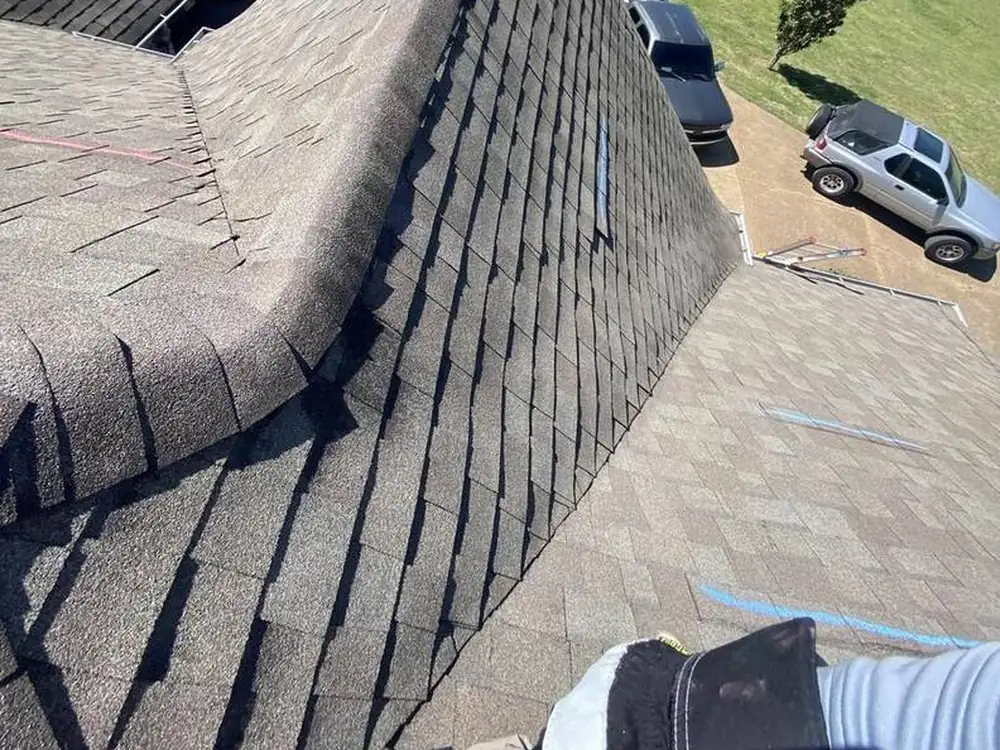
On the roof, an inspector is looking for a pattern, not one bad shingle. IBHS lists the main signs on asphalt shingles:
- A random pattern of impact marks across a slope, rather than wear concentrated in one area.
- Bruising: soft spots you can feel when you press on the shingle.
- Cracks or breaks where stones hit.
- Damaged ridge caps, which IBHS calls especially vulnerable on a shingle roof.
On our inspections we also check the parts that leak first once they're damaged: flashing around chimneys, skylights and sidewalls, pipe boots and vents, valleys, drip edge and gutters. When there's attic access, we look at the underside of the decking for water staining and damp insulation. Each slope gets checked separately, because wind-driven hail can hit one side of a house harder than the others.
Hail damage or normal wear?
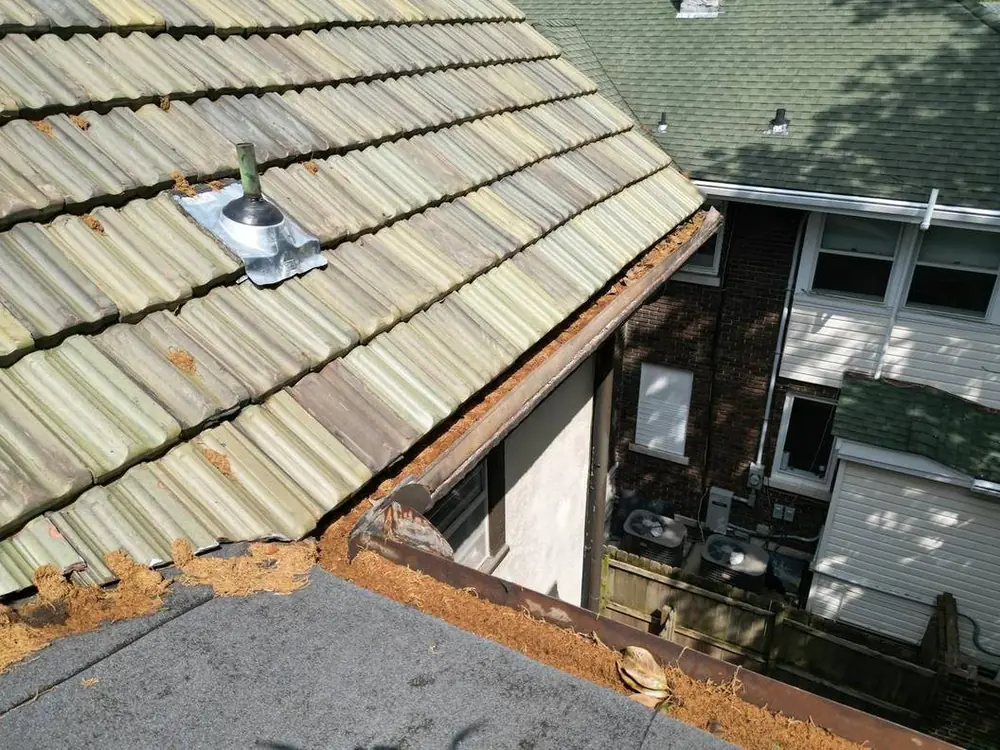
Not every missing granule is hail. IBHS lists several look-alikes, and a good inspector will tell you which is which instead of calling everything storm damage.
| What you see | Points to hail when… | Points to something else when… |
|---|---|---|
| Granule loss | It sits in round, random hit marks with a bruise underneath | It runs along shingle edges or is even across the roof (normal weathering) |
| Marks on shingles | They're scattered randomly across a slope | They follow a line or a walkway (installation, tools, foot traffic) |
| Discoloration | It's spotty, at impact points | It's uniform across the roof (age) |
| Cracked shingles | Soft metals nearby are dented too | There's no collateral damage anywhere on the property |
Source: IBHS, Is It Hail Damage? IBHS also notes that heavy rain alone can knock granules loose and lists manufacturer defects as another look-alike.
Can hail damage on a roof be repaired?
Often, yes. Light hail damage can sometimes be fixed by replacing the affected shingles or sections, and that's the recommendation when the rest of the roof has years of life left. Heavier damage spread across several slopes usually means the roof should be replaced, because patching dozens of bruised shingles leaves a roof that will keep failing one spot at a time. Matching matters too: a repair should use shingles as close to the existing roof as possible so it blends in.
The inspection is what decides it. If the answer is a roof repair, you get a written quote for the exact work. If the roof needs replacing, our guide to roof replacement cost explains what drives the price.
Inspection first, then the claim
The Mississippi Insurance Department's storm guidance lays out the order. Photograph the damage, inside and out, before anything is repaired. Cover holes so no more water gets in, and save receipts for those temporary repairs. Call your agent or company as soon as you notice damage.
Don't have permanent repairs made until the insurer has inspected and you've agreed on the cost.
A roofer's inspection before the adjuster visits gives you your own record: dated photos of each slope, the hits on the soft metals, and a written summary. It doesn't replace the adjuster's inspection, but it means you know what's on your roof when the adjuster arrives.
Door knockers after a storm
Hail storms bring out-of-town crews. The Mississippi Insurance Department warns homeowners to be wary of out-of-town roofers who set up shop after a storm, and of anyone demanding payment up front. Its deputy commissioner told WLBT in April 2024 to take a business card from any contractor who shows up and check their license with the Mississippi State Board of Contractors before agreeing to work. The Board's own site says residential contractors and roofers are required to be licensed, and its license search is free.
A few more rules from the same guidance: ask for proof of insurance, get the price in writing before work starts, and don't make the final payment until the roof has been inspected and you're satisfied.
What our hail inspection includes
EcoPitch is based in Hernando, and our inspections are free and no-obligation. After a hail storm, here's what you get:
- A real on-roof walk, slope by slope: shingles for bruising, cracks and granule loss; ridge and hip caps; flashing, pipe boots and vents; valleys, gutters and drip edge.
- An attic check when access allows, for water staining, daylight and damp insulation.
- Photos and a written report you keep, useful when you call your insurer.
- A straight answer on whether it's hail damage, normal wear or nothing at all.
If we find damage, you get a written quote and help documenting it for your adjuster. Whether you move forward is up to you. To book, call us or request your free roof inspection online. For what paid inspections cost elsewhere, see our roof inspection cost guide.
Hail damage roof inspection questions
Can hail damage on a roof be repaired?
Often, yes. Light hail damage can sometimes be repaired by replacing the affected shingles or sections. Heavier damage spread across several slopes usually means a replacement. An on-roof inspection with photos is what tells you which one your roof needs.
What do inspectors look for with hail damage on a roof?
A random pattern of impact marks, soft bruised spots in the shingles, cracks where stones hit, and damaged ridge caps. They also check soft metals like gutters, vents, flashing and the A/C unit for dents, which confirm hail actually fell.
How do I find hail damage on my roof?
Start on the ground. Look for fresh dents in gutters, downspouts and vents, and for bent A/C fins. Photograph what you find, then have a roofer inspect the roof itself rather than climbing up yourself.
What size hail is considered severe?
NOAA's National Severe Storms Laboratory classes hail 1 inch across (about quarter size) or larger as severe. Hail in a typical severe thunderstorm is about 1 to 1.75 inches.
Should I call my insurance company or a roofer first?
The Mississippi Insurance Department says to report damage to your agent or company as soon as you notice it. A roofer's inspection helps you know whether there is damage worth reporting, and gives you dated photos and a written record before the adjuster visits.
Is a hail damage roof inspection from EcoPitch free?
Yes. Our roof inspections are free and no-obligation. We walk the roof, check the attic when there is access, photograph every finding and give you a written report.