
Mold timing: U.S. EPA, A Brief Guide to Mold, Moisture and Your Home (updated February 18, 2026).
A roofing emergency is any roof damage that is letting water into your home right now, or leaves the roof open to the next rain: an active leak, a tree or large limb through the roof, large sections of shingles torn away, or any structural breach after a storm. Those can't wait for a scheduled repair. A few missing shingles with a dry ceiling, or an old stain that hasn't grown, usually can. This guide covers how to tell the difference and what to do in the first hour, safely, before help arrives.
If water is coming in now, don't keep reading: call us or go to our emergency roof repair page.
What's in this guide
- What counts as a roofing emergency?
- What to do in the first hour
- Protecting the inside of your home
- Why the first 48 hours matter
- Insurance: document, protect, keep receipts
- Who to call, and who not to
- What we do on an emergency call
- Roofing emergency questions
What counts as a roofing emergency?
| Call now | Book a repair soon |
|---|---|
| Water dripping or running into the house | An old ceiling stain that is dry and not growing |
| A tree or large limb on or through the roof | Small branches and debris on the roof, no visible hole |
| Large sections of shingles torn off, bare decking showing | A few missing or lifted shingles, ceiling dry |
| A sagging roof, or a hole you can see daylight through | Granule loss or curling shingles |
| Flashing or ridge cap peeled back with rain on the way | Gutters pulling away from the fascia |
The right-hand column still matters. A few missing shingles become exposed underlayment and then water on the decking after the next storm, so book a roof repair or a free inspection while it's still small.
What to do in the first hour
- Make sure everyone is safe. If the storm is still going, stay inside. Ready.gov's rule for thunderstorms is simple: “When thunder roars, go indoors.” Afterward, watch for fallen power lines and trees, and report them right away.
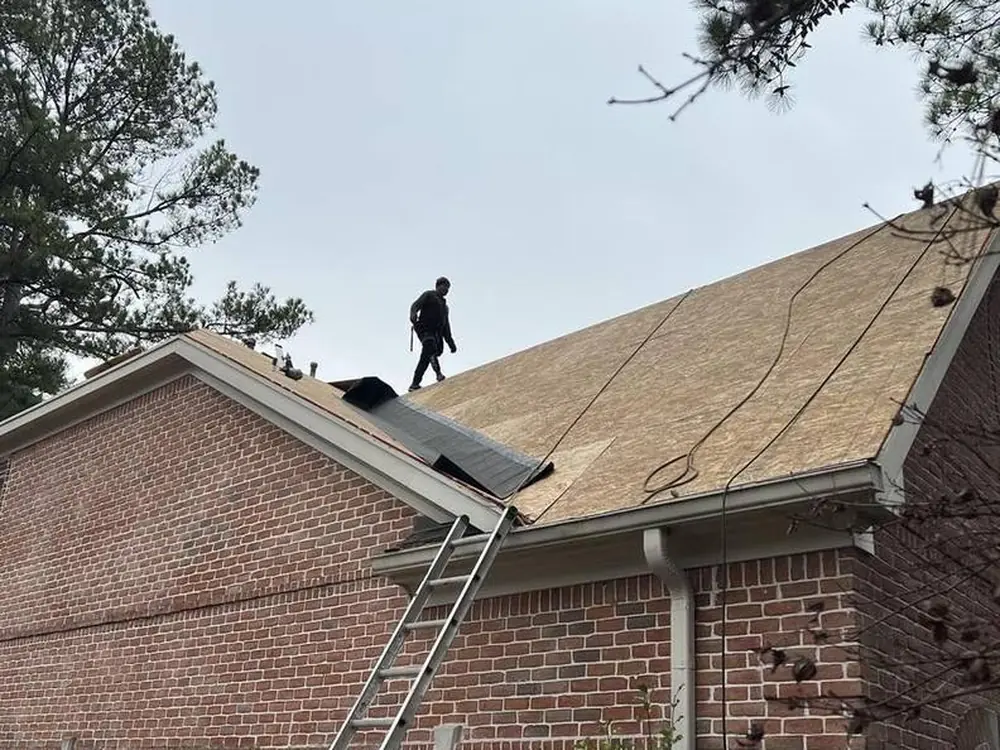
- Stay off the roof. A wet, storm-damaged roof is no place for a homeowner, and walking on it can add damage. Leave the roof to the roofer and the adjuster.
- Deal with water inside. Move belongings, set out buckets, and protect floors (more below).
- Take photos and video of the damage, outside and inside, before anything is cleaned up or covered.
- Call a local roofer to cover the opening, and call your insurance agent or company to report the damage.
If electrical fixtures, outlets or the breaker panel are getting wet, stay away from them and keep people out of that room until it's safe.
Protecting the inside of your home
The first job in a leak is limiting the damage inside:
- Move furniture, electronics and rugs out of the way of the water.
- Set a bucket or tote under each drip, with a towel in the bottom to cut splashing.
- If water is pooling in a bulging spot on the ceiling, a small hole at the low point lets it drain into the bucket instead of spreading across the drywall and bringing a section down.
- Check the attic if it's safe to get into, and put a container under any drip there too.
- Start drying with fans and towels as soon as the water is under control.
The water you see is rarely where the roof is open. It runs along the underlayment, rafters and decking before it shows up as a drip, so the hole can be several feet away from the stain. That's for the roofer to trace once the weather allows.
Why the first 48 hours matter
The U.S. Environmental Protection Agency says it is important to dry water-damaged areas and items within 24 to 48 hours to prevent mold growth. In North Mississippi and Memphis humidity, that clock is real. Soaked insulation, warped decking and stained drywall turn a roof repair into an interior renovation, and the longer water keeps getting in, the bigger that second job gets.
That's why the goal on day one isn't the permanent fix. It's stopping the water: getting the opening covered so the house can start drying, and then scheduling the real repair or replacement.
Insurance: document, protect, keep receipts
The Mississippi Insurance Department's storm guidance is clear on three points:
- Prevent further damage. Cover leaking roofs, broken windows and damaged walls, for example with a tarp, because insurance may not cover additional damage that happens after the storm.
- Keep every receipt, including for temporary repairs covered by your policy, so you can be reimbursed.
- Hold off on permanent repairs until the insurer has inspected and you've agreed on the cost. File the claim as soon as possible: your policy may require notice within a certain time frame.
Our insurance roof inspection guide walks through the adjuster's visit, and the hail damage roof inspection guide covers storm damage you can't see from the ground.
Who to call, and who not to
Emergencies bring out the worst door knockers. The Federal Trade Commission warns about contractors who show up uninvited looking for work, pressure you to decide on the spot, or want payment in full up front or only in cash (FTC, How To Avoid a Home Improvement Scam). The Mississippi Insurance Department adds a warning about out-of-town roofers who set up shop right after a storm.
Call a local roofer you can check. The Mississippi State Board of Contractors says residential contractors and roofers are required to be licensed, and its license search takes a minute. Ask for proof of insurance and get the price for the temporary cover in writing.
What we do on an emergency call
EcoPitch is based in Hernando and handles roofing emergencies across North Mississippi and the Memphis metro, including Horn Lake, Germantown, Collierville and Arlington. On an emergency call:
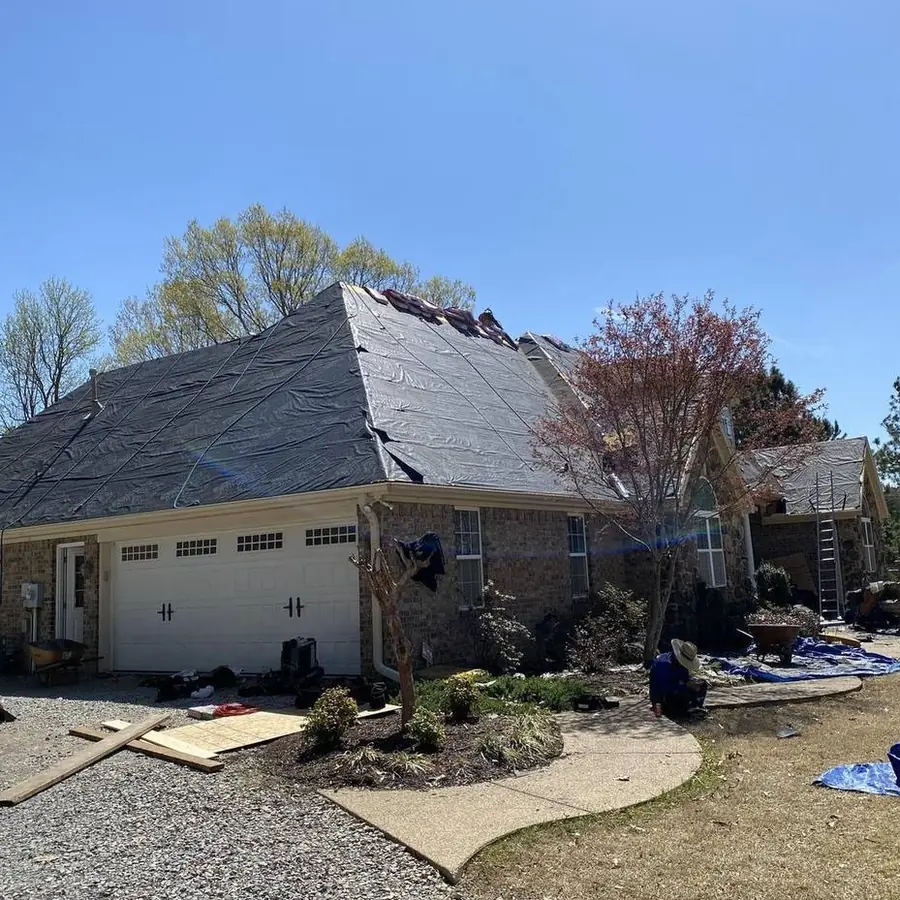
- Tarping. Heavy-duty tarps installed and secured to stop water getting in.
- Board-up. Plywood and reinforcement where wind or a falling tree has opened the home to the weather.
- Damage assessment. A full walk of the roof and the affected areas inside.
- Insurance documentation. Detailed photos, a written report and a scope your adjuster can act on.
- Permanent repair scheduling. A targeted repair or a full replacement, once the emergency is contained.
If the damage turns out to need a new roof, our roof replacement cost guide explains what drives the price. For anything letting water in now, call us or go to our emergency roof repair page.
Roofing emergency questions
What is a roofing emergency?
Roof damage that is letting water into the home now, or leaves the roof open to the next rain: an active leak, a tree or large limb through the roof, large sections of missing shingles, or any structural breach after a storm.
Is a roof leak an emergency?
An active leak with water coming into the house is. Protect the inside, take photos and get the opening covered. An old, dry stain that isn't growing usually isn't, but it still needs a repair before the next storm.
Should I go on my roof after a storm?
No. A wet, storm-damaged roof is dangerous, and walking on it can add damage. The Mississippi Insurance Department advises letting only the adjuster and the roofer you have chosen get on the roof.
How fast does water damage turn into mold?
The U.S. EPA says to dry water-damaged areas and items within 24 to 48 hours to prevent mold growth, which is why stopping the water comes first.
Does insurance pay for an emergency roof tarp?
Policies differ, but the Mississippi Insurance Department tells homeowners to make temporary repairs to prevent further damage and to save every receipt, including for temporary repairs covered by the policy, so they can be reimbursed.
What does EcoPitch do on an emergency roofing call?
We tarp and secure the opening, board up breached areas, walk the roof and the affected rooms, document the damage with photos and a written report for your insurer, and schedule the permanent repair or replacement.